

Today’s Substack is a little longer than what I envision moving forward, but for good reason—we’re diving deep into starting solids with confidence. I wanted to cover all the basics so you feel fully equipped with the info you need, whether you're just beginning this journey or looking for a solid (pun intended) refresher. Think of this as a go-to reference, something to come back to whenever you need a little guidance. Let’s get into it!
Let’s Start with the Basics
When Are Babies Ready for Solids?
Most babies are ready around 5-6 months, but some earlier or later. Key milestones to look for:
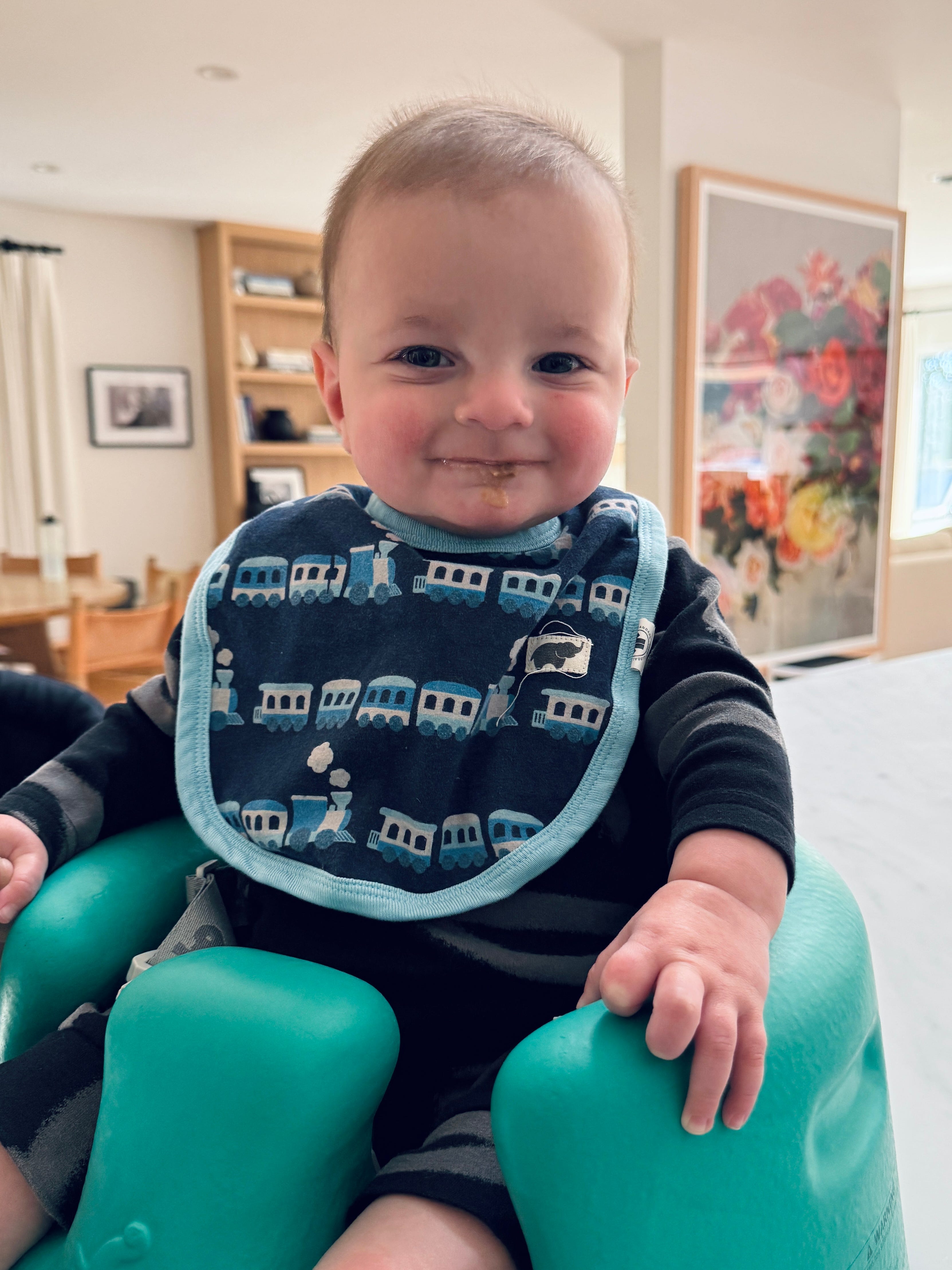
Sitting up with minimal support – Poppy was fully sitting at 6 months, while Finn still needs a little help. Because of that, we’re very hands-on during mealtimes and try to feed him when both Thomas and I are home—one of us helps him stay upright so he doesn’t face-plant into his food (or the counter).
Good head control – Your baby should be able to hold their head up steadily.
Showing interest in food – Both Finn and Poppy started reaching for bananas around 5 months, which was my cue that they were ready to start exploring solids.
Every baby moves at their own pace—watch for these signs and trust your gut!
Choosing a Feeding Approach:
Purees, progressing to chunkier textures. This method of introducing solids to babies involves offering smooth, blended foods by spoon before progressing to more textured foods. Parents typically start with single-ingredient purées and gradually introduce combinations and thicker textures as the baby develops
Baby-led weaning (BLW). BLW is a method of introducing solid foods to babies that skips traditional spoon-feeding with purées and instead encourages self-feeding from the start. With BLW, babies are offered appropriately sized and textured finger foods that they can grasp, explore, and eat at their own pace. This approach promotes independence, fine motor skills, and helps babies learn to chew and manage different textures early on. It also allows them to participate in family meals by eating modified versions of what the rest of the family is having.
A combo of both.
There’s no right way—just the way that feels most comfortable for you and your baby!
What We Did…
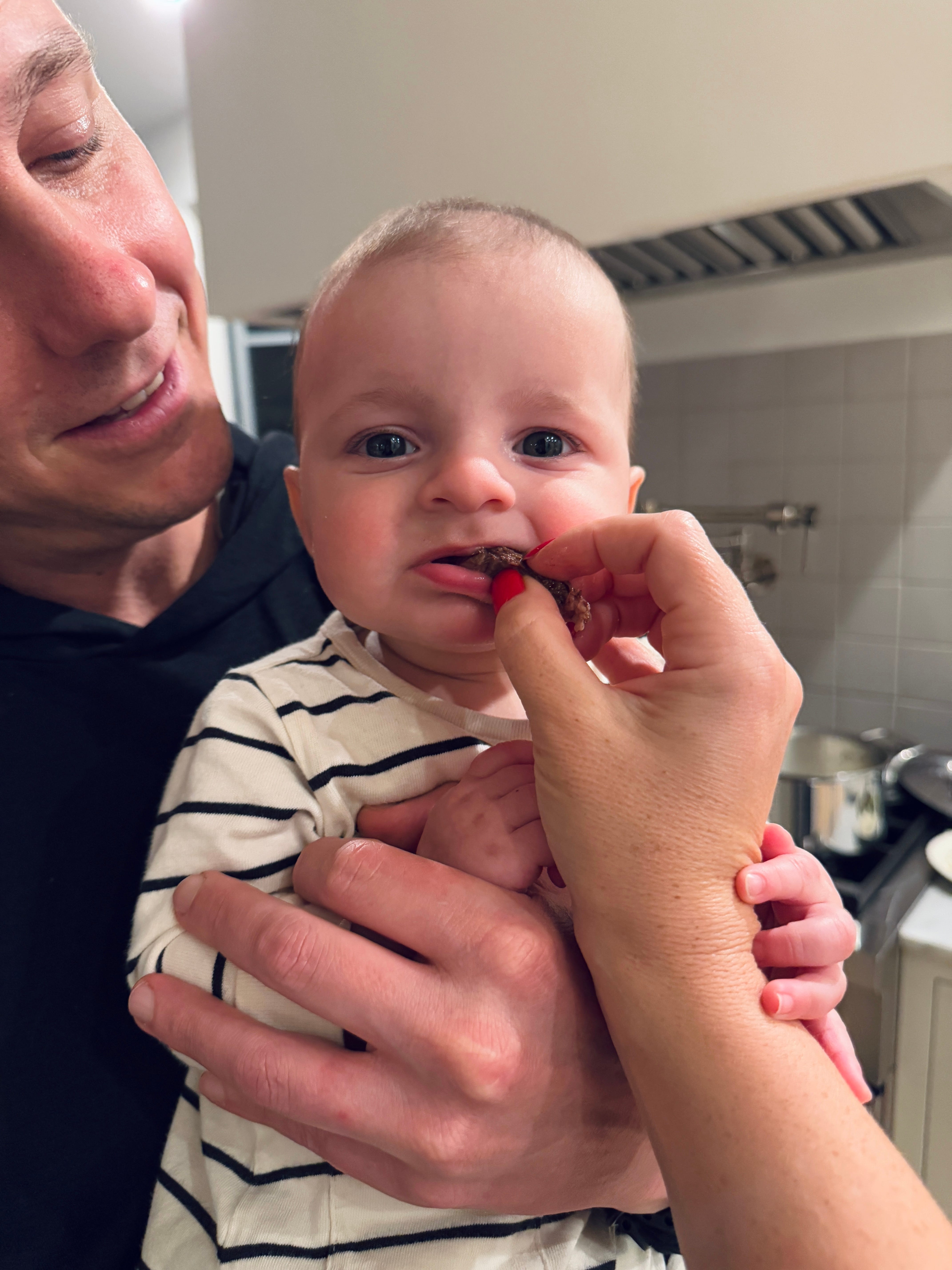
For both kiddos, we chose a combo approach—purees for nutrition and BLW for exposure. Example? Last week, I gave Finn a large piece of steak to gnaw on! He didn’t actually take any of it down - just sucked it dry. Followed by a few spoonfuls of blended sweet potatoes. Here’s our plan:
5-6 months – Thin purees plus the occasional bite of food that won’t break off (ex: a large piece of steak)
7-8 months – Chunkier purees + large, soft strips of food for texture exploration.
9 months and onwards – Small, bite-sized pieces of soft food. By 9 months I’d like him to be eating meals 3 times a day plus his bottles.
A Few Other Considerations When Starting Solids
Offer variety to help prevent picky eating later.
Meal timing: Aim for 30 min – 1 hour after a milk feeding.
Number of meals:
Start with 1 meal per day.
Add a second meal around 6-7 months.
Work up to 3 meals/day by 8-9 months.
Embrace the mess – It helps with fine motor skills and a positive food relationship! This is a tough one for Thomas but it’s temporary and we just do all feeding over hardwood floors. Trying to spare our rugs lol.
Things to Avoid:
Honey (until age 1 – botulism risk). We’ll talk about this more later.
Too much salt (tiny kidneys can’t handle it!).
Introducing Allergens
Start early and offer often! Common allergens include:
Milk, eggs, peanuts, soy, wheat, tree nuts, fish, shellfish, sesame.
We’ll break this down further with expert advice soon! If you have any questions specifically about allergies, leave them in the comments below! **as I said last week, I am NOT a doctor and if you have any concerns about this portion, please consult your pediatrician*
Let’s Talk About Salt & Sugar
Salt:
Babies need way less salt than we do. As they have way more taste buds! I didn’t completely avoid it, but I kept it minimal—just a pinch in large puree batches.
Sugar:
I’m not anti-sugar, but I focus on natural sugars from fruit. (remember NO honey until 1 years old!) No added white or brown sugar, but bring on the raspberries, peaches, and bananas!
Gear We Love
If you’re making homemade baby food, here are our ride-or-die essentials:
Baby Food Maker – Used it daily from 6-11 months with Poppy and broke it out months ago to start prepping food for Finn.
Glass Baby Food Containers – Best way to store homemade purees in the fridge or freezer.
Countertop High Chair – Perfect for mealtime at the counter.
Silicone Spoons – Cute and practical!
Silicone Placemats – A lifesaver when eating out.
Finn’s First 5 Foods: A Breakdown + Our Pediatricians 5 rules for Starting Solids
Let’s talk about Finn’s first bites (next week we will get into recipes / ratios)! These are the five foods that kicked off his solids journey—some classics, some favorites from big sister Poppy, and a couple of fun experiments along the way.
Banana 🍌
Both Poppy and Finn started reaching for our bananas early on, so naturally, it was their first taste of solid food. At first, I let them gnaw on a whole banana just to get a feel for it. But once they got strong enough to actually break off a piece (cue mild panic), I switched to mashing it up and spoon-feeding them.
Blueberries 🫐
If you follow me over on WGC, you know I live for my blueberry banana smoothie. My version includes chia, hemp, and protein powder, but for Finn, I keep it simple: frozen blueberries, banana, and water blended together. I set aside an ounce or two for him before adding my extras and blending again, then spoon-feed him the mix. And let me tell you—he hoses it. I think the cold temperature is a fun change for him too!
Avocado 🥑
Obviously, this had to be in our top five—I wrote an entire avocado cookbook back in 2012! I keep it super simple: just scrape a little avocado with a spoon and pop it into their mouth. For Poppy, I added a tiny squirt of lemon or lime juice, which she loved. Finn? Not so much (yet). We’ll get there!
Nectarines 🍑
Back in September, when stone fruits were at their peak, I went full-on baby food prep mode and froze a stash of nectarine purée. Now, I just thaw a portion overnight in the fridge and let it sit at room temp for 30 minutes before serving. That way, the flavors are more vibrant, and it’s not too cold.
Sweet Potato 🍠
I pureed sweet potatoes with a tiny bit of butter and the smallest pinch of salt—Finn was obsessed. Total winner.


My Pediatrician’s 5 Rules for Starting Solids
1️⃣ No honey until after 1 year – Honey can contain bacteria that cause infant botulism, so it’s a hard no until their first birthday.
2️⃣ Small sips of water are okay starting at 6 months – Just a little here and there to get them used to it, but breast milk or formula should still be their main source of hydration.
3️⃣ Introduce egg early – Offering eggs sooner rather than later can help identify any potential allergies.
4️⃣ Same goes for peanut butter – Early exposure is encouraged (as long as there are no risk factors), so I introduce it in small amounts and watch for reactions. If you see a reaction, call your pediatrician.
5️⃣ Work up to protein 3x a day by around 9 months – Babies need plenty of iron and protein as they grow, so by 9-ish months, aim for three servings a day.
Major shoutout to Dr Danny at Balboa Pediatrics. I love the entire clinic with my whole heart.
One final thought…
Remember, when you first introduce solids to your baby, this is completely new territory for them. Until now, they’ve only known how to swallow milk or formula, so their first bites will feel strange—and their reactions might be hilarious (or downright skeptical). Expect confusion, exaggerated gagging, dramatic facial expressions, and maybe even some food dribbling right back out. Totally normal!
Don’t let those initial reactions discourage you. Babies learn by watching, so I made a point to get right in front of both Poppy and Finn while they ate, showing them how I chewed and exaggerated my excitement—big smiles, happy noises, and lots of “Mmm, yum!” reactions. (did I look like a lunatic - sure did lol) We also make a point of eating together as a family so they can both observe us as much as possible. The more fun and engaging you make it, the more likely they are to stay curious and excited about food. It’s all about creating a positive, low-pressure experience from the start!
My son is a few weeks younger than Finn and I am so excited to follow along! Thank you so much for sharing, Gaby!
so exicited for this! this is so awesome and helpful. Thanks Gaby!